How to Calculate How Much Concrete You Need (With a Simple Formula)

21 August 2026

Share this article

Before you call a concrete supplier or pick up bags at the hardware store, you need one number: how many cubic yards of concrete your project requires. Get it right and you order confidently. Get it wrong and you're either running short mid-pour which forces a cold joint and weakens the slab or paying for material you don't need. 

This guide walks through the formula, shows real examples for the most common residential pours in the East Valley, and answers the question a lot of DIYers wrestle with: at what point does ready-mix actually make more sense than bagging it yourself? 


The Formula: Length × Width × Thickness ÷ 27 

Concrete is sold by the cubic yard — a cube that measures 3 feet on every side, or 27 cubic feet. The formula to convert your project dimensions into cubic yards is: 

Length (ft) × Width (ft) × Thickness (ft) ÷ 27 = Cubic Yards 

The one step people consistently miss: thickness needs to be in feet, not inches. A 4-inch slab is 0.33 feet. A 5-inch slab is 0.42 feet. A 6-inch slab is 0.50 feet.


Here's a quick reference:

Thickness In Feet
3 inches 200 sq ft
3.5 inches 360 sq ft
4 inches 600 sq ft
4.5 inches 800 sq ft
5 inches
6 inches
8 inches 0.67 ft

Once you have your cubic yards, add a 5 to 10% waste buffer before you order. We'll cover why that matters in a moment.

Real Examples: Common East Valley Pours


Backyard Patio — 10×20 ft at 4 inches

10 × 20 × 0.33 ÷ 27 = 2.44 cubic yards

Add 10% waste buffer: order 2.7 yards

This is a classic small-truck job — under 3 yards, the kind of pour that most ready-mix suppliers charge a short-load fee for or won't take at all. King Concrete's small trucks start at 1 yard with no penalty.


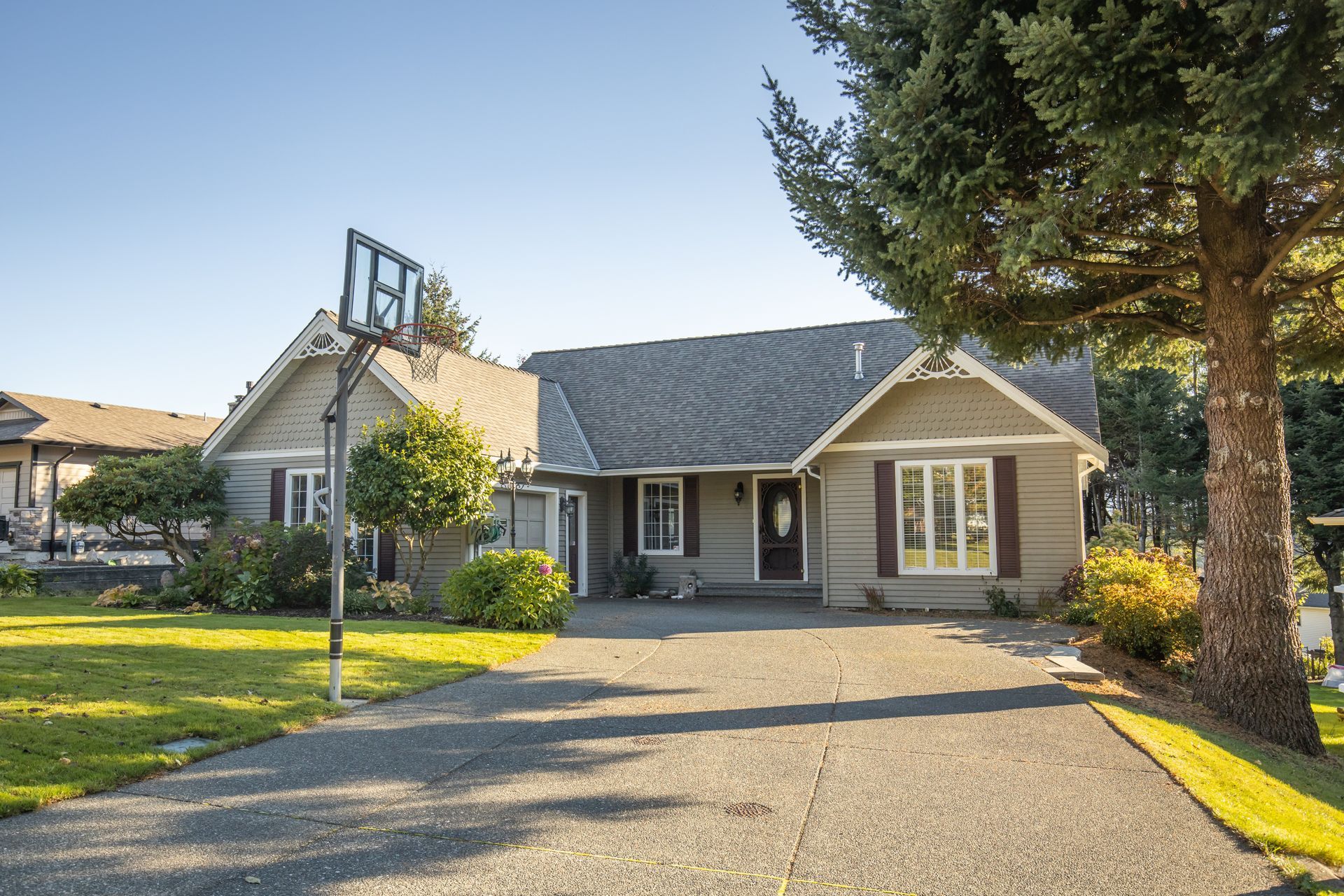
Standard Driveway — 12×30 ft at 4 inches

12 × 30 × 0.33 ÷ 27 = 4.40 cubic yards

Add 10% waste buffer: order 4.9 yards (round up to 5)

A good candidate for either a small or large truck depending on scheduling. At 5 yards, a large truck is more efficient.


Double-Wide Driveway — 20×30 ft at 4 inches

20 × 30 × 0.33 ÷ 27 = 7.41 cubic yards

Add 10% waste buffer: order 8.2 yards (round up to 8.5)

Standard large truck territory. This is one of the most common residential pours in Mesa, a two-car driveway running from the street to a double garage.


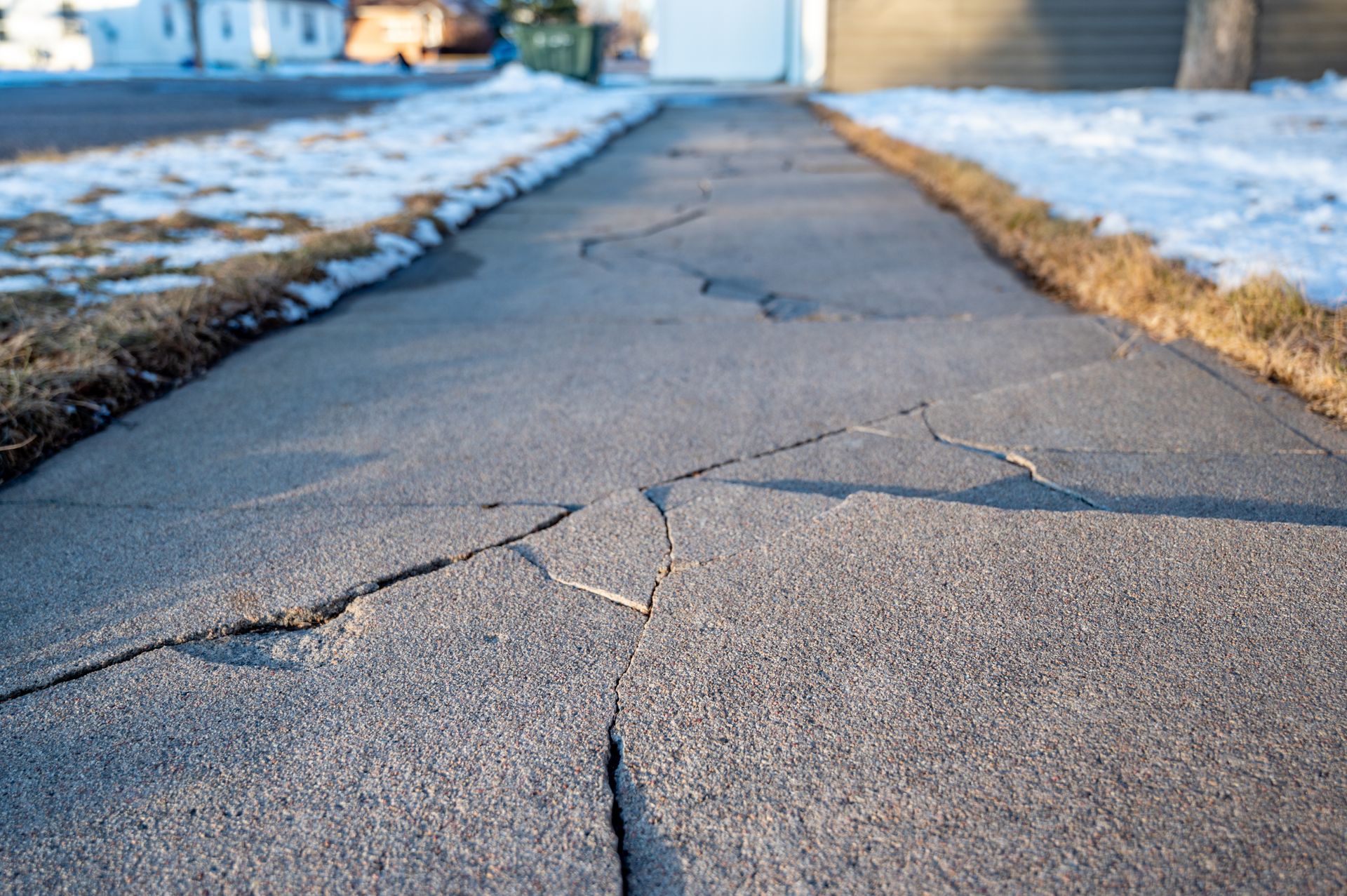
Sidewalk Repair — 4×12 ft at 4 inches

4 × 12 × 0.33 ÷ 27 = 0.59 cubic yards

Add 10% waste buffer: order 0.65 yards (round up to 1)

This is where the 1-yard minimum matters. You can't order half a yard from most suppliers — and you shouldn't try to mix this by hand either. One yard delivered by small truck is the right call.


Garage Floor — 22×22 ft at 5 inches

22 × 22 × 0.42 ÷ 27 = 7.49 cubic yards

Add 10% waste buffer: order 8.3 yards (round up to 8.5)

At 5 inches, this slab can handle daily vehicle traffic and tool storage weight. A common Arizona upgrade when homeowners convert an older 4-inch slab that's cracking.


Residential Foundation Slab — 30×40 ft at 6 inches

30 × 40 × 0.50 ÷ 27 = 22.22 cubic yards

Add 5% waste buffer: order 23.3 yards

At this scale, a smaller waste buffer is appropriate — overordering on a 23-yard pour wastes significantly more material and money than on a small patio. Multiple truck loads are scheduled sequentially to keep the pour continuous.


Why the Waste Buffer Matters

Adding 5 to 10% to your concrete order isn't pessimistic, it's how professionals have always ordered concrete. Here's what eats into your calculated volume:


Subgrade variation. Your forms may look level, but subgrades are rarely perfectly flat. Low spots in the gravel base consume more concrete than your calculation assumes.

Form flex. Wood forms bow slightly under the weight of wet concrete, especially on longer runs. A form that bows out an inch across a 20-foot span adds measurable volume.

Spillage and waste. Some concrete sticks to the chute, spills at the edges of forms, or gets lost in transit between the truck and the pour. Even experienced crews lose a small amount on every job.

Cold joints. Running short mid-pour is the worst outcome. A cold joint where a first batch starts to set before the second arrives and bonds to it creates a structural weakness in the slab that can cause cracking along that line for the life of the driveway or patio. It's not cosmetic; it's structural.

The rule: for pours under 10 yards, use 10%. For pours over 10 yards, 5% is usually sufficient. When in doubt, round up to the next half yard. The cost difference is small. The downside of running short is not.


Irregular Shapes: Breaking Them into Rectangles

Not every slab is a clean rectangle. An L-shaped driveway, a patio that wraps around a corner, or a foundation with a bump-out all require a little more math. The approach is simple: break the shape into rectangles, calculate each one separately, and add them together.


Example: L-Shaped Driveway

Imagine a driveway that's 12×20 ft running from the street, plus a 10×10 ft apron in front of a side-entry garage. Those are two rectangles:

  • Section A: 12 × 20 × 0.33 ÷ 27 = 2.93 yards
  • Section B: 10 × 10 × 0.33 ÷ 27 = 1.22 yards
  • Total: 4.15 yards → order 4.6 yards with 10% buffer

The same method works for any shape you can sketch on paper. Draw it, divide it into rectangles, calculate each piece.


Circles and Curves

For a circular pour (a round patio, a column footing), use:

3.14 × Radius² × Thickness (ft) ÷ 27 = Cubic Yards

A 12-foot diameter circular patio (radius = 6 ft) at 4 inches:

3.14 × 36 × 0.33 ÷ 27 = 1.38 yards → order 1.5 yards


Should I Order Bags or Ready-Mix?

This is the question almost every DIY homeowner asks, and the honest answer depends entirely on one thing: how many cubic yards your project requires.


When bags make sense

For projects under about 0.5 cubic yards, a fence post base, a step repair, patching a crack, or a very small footing, bagged concrete is practical. An 80-pound bag of Quikrete yields roughly 0.6 cubic feet, so you need about 45 bags to make a cubic yard. At roughly $6.75 to $8.00 per bag, that's $303 to $360 per yard in materials alone, before your time, mixer rental, and the physical effort of mixing and pouring it.


When ready-mix makes sense

Above 1 cubic yard, ready-mix is almost always cheaper per cubic foot and dramatically faster. At East Valley pricing of $160 to $195 per yard delivered, you're paying less per yard than bagging,  and you're getting a consistent, professionally batched mix with the right water-to-cement ratio, not a batch that varies based on how carefully you added water to each bag.


More importantly: bagging a yard of concrete by hand takes a full day and a rented mixer. A ready-mix truck delivers it in 20 minutes, and your crew pours it in one continuous operation — which produces a better slab.

Here's the honest comparison:

Project Size Bags (materials only) Ready-Mix Delivered Better Option
0.5 yards $152–$180 $80–$98 + short-load fee Bags (no minimum hassle)
1 yard $303–$360 $160–$195 Ready-mix
2 yards $607–$720 $320–$390 Ready-mix
3 yards $910–$1,080 $480–$585 Ready-mix
5+ yards $1,515–$1,800+ $800–$975 Ready-mix — not even close

The crossover point is roughly 1 yard. Above that, ready-mix saves money, saves time, and produces a more consistent slab. Below that, bags are practical for small patch work where calling a truck isn't worth the logistics.


One note: most ready-mix suppliers set a 3 to 5-yard minimum and charge short-load fees for smaller orders, which shifts that crossover point higher and makes bags look more attractive for 1 to 2-yard jobs. King Concrete's small trucks start at 1 yard minimum with no short-load fee — which is why the math above works in favor of ready-mix from 1 yard up, not 3 or 4.


A Note on PSI: Don't Just Order "Concrete"

When you call a ready-mix supplier, you'll be asked for a PSI specification — the compressive strength of the mix. This isn't a technicality to skip. Different pours need different PSI:

Project Recommended PSI
Sidewalks and foot-traffic patios 3,000 PSI
Residential driveways (passenger vehicles) 3,500–4,000 PSI
Garage floors 4,000 PSI
Driveways with truck or RV access 4,000–4,500 PSI
Foundations and structural slabs 4,000 PSI minimum
Commercial work (MAG-approved) Per engineered spec

In Arizona's heat, we generally recommend 4,000 PSI for any driveway or garage slab. The higher strength mix holds up better under thermal cycling, and the cost difference per yard is modest. It's one of those upgrades that costs very little upfront and saves significantly on cracking repairs later.

If you're not sure what PSI to specify, call us. We'll ask you three questions about your project and tell you the right mix.


Quick Reference: Cubic Yards by Project Type

Project Dimensions Thickness Cubic Yards Order
Small patio 10×10 ft 4" 1.22 1.4 yds
Medium patio 12×16 ft 4" 2.37 2.6 yds
Large patio 20×20 ft 4" 4.94 5.5 yds
Small driveway 10×20 ft 4" 2.44 2.7 yds
Single driveway 12×30 ft 4" 4.40 4.9 yds
Double driveway 20×30 ft 4" 7.41 8.2 yds
Garage floor 20×22 ft 5" 6.93 7.7 yds
Sidewalk (short) 4×20 ft 4" 0.98 1.1 yds
Sidewalk (long) 4×40 ft 4" 1.98 2.2 yds
Foundation slab 30×40 ft 6" 22.22 23.3 yds

All "Order" figures include a 10% waste buffer, rounded up to the nearest half yard.


What to Have Ready When You Call

When you're ready to order, a 60-second prep makes the call faster for everyone. Have these on hand:

  1. Your dimensions — length, width, and intended thickness in feet or inches
  2. Project type — driveway, patio, sidewalk, foundation, etc.
  3. Access — is it a standard street-front driveway, or does the truck need to come through a gate or down a side yard?
  4. Your timeline — when you need the pour to happen
  5. PSI preference — or just tell us the project type and we'll recommend the right mix


We serve Mesa, Gilbert, Chandler, Queen Creek, Apache Junction, and surrounding Maricopa County communities. Small trucks for jobs starting at 1 yard, large trucks up to 10 yards per load. No short-load fees.

King Concrete Inc. is a veteran-owned ready-mix concrete supplier in Mesa, AZ, serving the East Valley since 2005. We deliver small and large truck loads with a 1-yard minimum — no short-load fees. Mon–Sat, 7am–4pm. 480-744-7271.

Recent Posts

21 August 2026
You've done the math. Your backyard patio repair needs about 2 yards of concrete. Maybe it's a cracked sidewalk section, a small garage apron, a post footing repair that got bigger than expected, or a patio extension that only adds a couple hundred square feet. You call a ready-mix supplier. They tell you their minimum is 3 yards or 4, or 5. Some charge a short-load fee that adds $40 to $60 per yard to anything under their minimum, which turns a $350 material order into a $550 one before a shovel hits the ground. Some just won't send a truck at all. So you're left with two bad options: overbuy concrete you don't need or spend a day mixing bags by hand.  There's a third option. It's what King Concrete, Inc. was built to do.
21 August 2026
If you're a Mesa homeowner getting quotes on a new driveway — or replacing one that's cracked and heaving after a few Arizona summers — the first question is always the same: how much is this actually going to cost? The national websites will give you a range so wide it's almost useless. This guide is written by King Concrete, Inc., a ready-mix concrete supplier based in Mesa with over 35 years of experience serving the East Valley. We don't pour driveways — we supply the concrete to the contractors who do. That means we see the actual material costs on dozens of residential jobs every month, and we can give you a straight answer. What Does a Concrete Driveway Cost in Mesa, AZ in 2026? For most Mesa homeowners, a standard concrete driveway replacement runs $4,500 to $8,200 installed in 2026. That range covers a typical single or double-width residential driveway from the street to the garage — roughly 400 to 800 square feet — with a broom finish, expansion joints, and standard 4-inch thickness.